Found Termites? What NOT to Do (Do Not Disturb the Nest)
Found termites in your Adelaide home? Do not spray, poke, or disturb the nest. Here is exactly what to do (and avoid) before a technician arrives.
Key takeaways
- The single most important rule is do not disturb the colony: no spraying, no poking mud tubes, no pulling apart damaged timber to 'see how bad it is'.
- Supermarket aerosol sprays repel rather than kill a colony, scattering termites into new, undamaged parts of the house instead of solving the problem.
- Photograph and note the location, then leave the area alone. This gives the technician who assesses your home a clean, undisturbed picture to work from.
- Adelaide's limestone and calcrete soils mean a colony you disturb in one spot can easily be active metres away already, so isolated DIY action rarely contains anything.
If you have found termites in your Adelaide home, the first move is to do nothing to the area itself: no spraying, no poking, no pulling back damaged timber. Photograph what you see, note the exact spot, and get a licensed technician out to assess it before the colony is disturbed further.
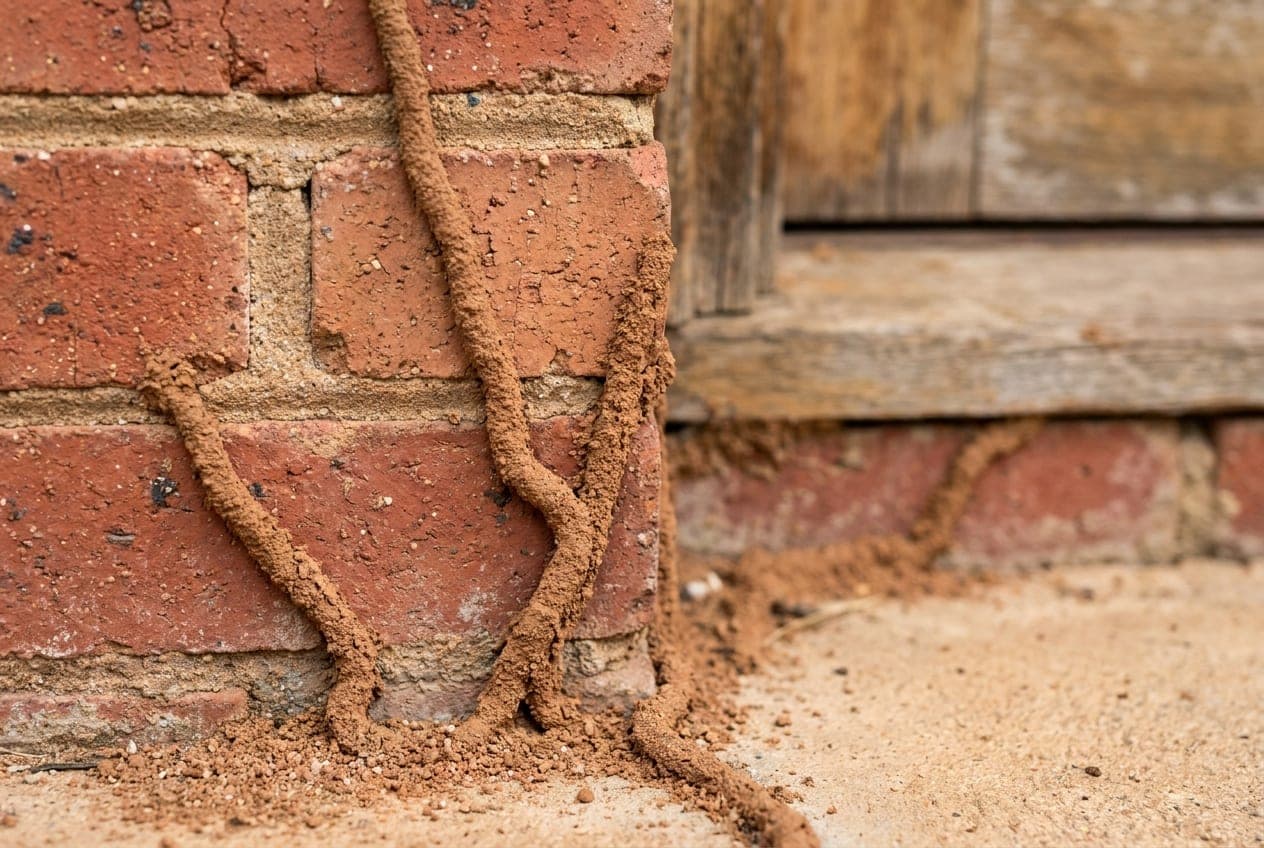
That instinct to act immediately is understandable, but it is exactly what makes an existing termite problem harder to fix. Termites are colony insects operating largely out of sight, and the mud tubes, hollow timber, or discarded wings you have just noticed are the visible tip of something that has usually been active for months already. What you do in the next few hours matters more than most homeowners realise.
Why disturbing the nest makes things worse, not better
A subterranean termite colony can run into the hundreds of thousands of individuals, foraging through soil and timber across an area far wider than the single spot where you happened to spot them. When a colony is disturbed, physically or with a repellent chemical, workers and soldiers do not simply die off. Many retreat, seal off the damaged tunnel section, and relocate their foraging effort elsewhere in the structure. You have not removed the problem, you have made it move and made it harder to track. This is one of the most common and costly DIY mistakes, covered in more detail in 10 termite mistakes Adelaide homeowners make.
The aerosol spray trap
Supermarket pest sprays are formulated to repel or kill on contact, which is the wrong tool entirely for a colony living inside a wall cavity, subfloor, or underground nest. Spraying a mud tube might kill the handful of termites inside it at that moment, but it does nothing to the thousands still active elsewhere in the colony, and it teaches the surviving termites to avoid that route. A technician assessing the property afterwards has lost the clearest piece of evidence (an intact, active tube) and has to work out where the colony went instead of where it was.
Do not pull apart timber to check the damage
It is a natural urge to want to know how bad it is, and prying back a skirting board or breaking into a stud to look feels like information gathering. In practice it disturbs galleries and tunnels a technician relies on to map how far the colony has spread, and it can turn a section that needed a targeted repair into one that now needs replacing. Leave exposing the timber to the inspection itself.
Do not move firewood, mulch, or timber offcuts away from the area either
A less obvious mistake is treating the discovery as a cue to tidy up. Homeowners often shift a woodpile, rake back mulch, or drag away an old timber offcut sitting near the affected spot, assuming they are removing a food source. If termites are actively foraging through that material, moving it can carry live termites to a new part of the garden or, worse, closer to another part of the house. Leave garden timber and mulch exactly where it is until the technician has had a look at the full picture.
What to actually do once you have found the sign
- Photograph it. A clear photo of the mud tube, damaged timber, or discarded wings gives the technician useful context before they even arrive.
- Note the exact location. Which room, which external wall, how close to ground level. This detail speeds up the assessment.
- Leave the area alone. No spraying, no scraping, no poking with a screwdriver.
- Check nearby areas visually only. Look, do not touch, at adjoining skirting boards, door frames, or subfloor vents for related signs.
- Book an assessment promptly. Every week a colony goes unaddressed is another week of feeding on structural timber.
If you are not yet certain what you are looking at, run through the do I have termites checker first. It is a faster way to gauge how urgent the situation looks before you commit to a full inspection.
The Adelaide soil detail most homeowners do not know
Much of metropolitan Adelaide sits on limestone-derived and calcrete soil, particularly through the western, northern, and parts of the southern suburbs. That rock is riddled with natural fissures and old root channels, and subterranean termites use them as ready-made access points into a subfloor, often with far less surface mud-tube evidence than you would see on heavy clay soil elsewhere in Australia. The practical effect is that the mud tube or damaged skirting you have found is very rarely the only access point. Disturbing it and assuming you have dealt with "the" entry point is a mistake specific to Adelaide's geology: the colony likely has other, quieter ways into the same structure that a visual DIY check will never find. This is why a full assessment, rather than a targeted spray on the one spot you noticed, matters more here than it might in a different soil type. Our broader identifying termites and termite damage in Adelaide guide covers how these signs vary by suburb and season.
What an actual assessment involves
A licensed technician working on a genuine termite find will look well beyond the spot you reported, checking subfloor access points, external walls, garden beds against the foundation, and any timber in ground contact. They are trained to read mud tubes and galleries for activity level without destroying the evidence, and can identify the species involved, which affects the treatment approach. For background on how the treatment methods differ once an infestation is confirmed, see barrier vs baiting: which termite treatment is right for your Adelaide home. The Commonwealth Scientific and Industrial Research Organisation has documented how far subterranean colonies can forage from a single nest, which is part of why professional assessment (not a single visible sign) determines the right response (see CSIRO's termite research).
None of this requires demolition or guesswork on your part. A proper assessment is largely non-invasive: moisture meters, a torch, careful tapping of suspect timber, and a trained eye for the difference between old, dormant galleries and an active colony. The technician's job is precisely the part homeowners get wrong when they try to self-diagnose: reading the evidence without destroying it.
Getting the right help quickly
Once you have found a genuine sign and left it undisturbed, the next step is straightforward: get a licensed technician to assess it before deciding on treatment. We connect Adelaide homeowners with licensed local technicians for exactly this kind of assessment through our termite treatment service, matched to your suburb, your home's construction type, and how the signs you have found are presenting. Acting fast is right. Acting on the area yourself is the one thing to avoid.
Ready to get quotes from licensed technicians?
Tell us about your problem and we match you with a vetted local operator. Free, no obligation.
Get free quotesFrequently asked questions
Stop touching the area. Do not spray it, poke it, or try to remove any mud tubes or damaged timber. Take a few photos for reference, note which room or external wall it is near, and arrange for a licensed technician to assess the property before anything else happens.
Off-the-shelf sprays are built to repel or kill on contact, not to deal with a colony living inside timber or soil. A repellent spray can make the termites near the surface scatter into unaffected parts of the structure, effectively spreading the problem rather than fixing it, and it also removes the intact evidence a technician needs to work out where the colony is really established.
No. Breaking into damaged timber or plasterboard to inspect it yourself disturbs the colony's tunnels, can knock down mud tubes that show the technician exactly where termites are active, and risks turning a contained assessment into unnecessary demolition. Leave the exposing of timber to the professional inspection.
It is not worth the wait. A subterranean colony can number in the hundreds of thousands and keeps feeding every day it goes unaddressed, and structural timber loses strength the longer it is left. The safer approach is to get an assessment booked as soon as you notice a sign, not once it becomes convenient.