10 Termite Mistakes Adelaide Homeowners Make
The termite mistakes Adelaide homeowners repeat most often, from ignoring flying termites to skipping annual checks, and the fixes that actually reduce risk.
Key takeaways
- Most termite damage in Adelaide homes traces back to a handful of repeated, avoidable mistakes rather than bad luck.
- Skipping annual inspections is the single biggest mistake, because termites can be active inside a wall for years before any visible sign appears.
- Poking, spraying or disturbing a suspected nest is a classic homeowner reflex that scatters the colony and makes proper treatment harder, not easier.
- Cheap, one-off treatments and DIY sprays treat what you can see, not the colony behind the wall, which is why so many Adelaide homes get repeat visits within a year or two.
The most common termite mistake Adelaide homeowners make is treating inspections as optional once a house looks fine on the surface. Termites cause the bulk of their damage out of sight, in wall cavities and subfloors, so by the time a mistake becomes visible it has usually been compounding for a year or more. The 10 mistakes below are the ones we see repeated across Adelaide properties of every age.
1. Skipping the annual inspection
A house that looked clear last year is not automatically clear this year. Termite colonies can establish and expand inside a wall cavity for a long stretch without producing any surface evidence at all, which is exactly why annual termite checks exist as a standard recommendation rather than a sales upsell. Homeowners who only book an inspection when they suspect a problem are, by definition, checking after the risk window has already been open for a while.
2. Assuming a newer home is not at risk
New-build Adelaide properties get treated as low-risk because the timber is fresh and the slab is recent, but termite risk has nothing to do with the age of the house and everything to do with soil contact, moisture and concealed access points. A poorly finished retaining wall or a garden bed built up against the slab edge on a 3-year-old home carries the same risk profile as an older property with the same landscaping mistake.
3. Disturbing a suspected nest
Poking a mud tube, spraying a can of insecticide on visible termites, or knocking through a hollow-sounding section of skirting are all natural reactions, and all of them make the situation harder to treat properly. Disturbing a colony scatters workers into new parts of the timber frame and can push the group deeper out of reach, which is the opposite of what you want before a licensed technician has assessed the extent of the activity.
4. Treating a DIY spray as a fix
Off-the-shelf termite sprays only reach the termites currently exposed at the surface. They do nothing to the queen, the nest, or the rest of the colony working through the timber elsewhere in the structure, so a DIY spray often buys a false sense of resolution while the real problem continues unaddressed behind the wall. This is covered in more depth in DIY termite treatment vs professional, but the short version is that a spray can looks like progress and usually is not.
5. Choosing the cheapest quote without checking what is included
A low quote on termite work is often a mistake in disguise, because the price gap between a proper barrier or baiting installation and a corner-cut version usually shows up later as a repeat callout. Is cheap termite treatment worth it? walks through exactly what a bargain quote tends to leave out, from inadequate chemical coverage to skipped subfloor access points.
6. Ignoring moisture and drainage issues
Adelaide's clay-heavy soils swell and crack across our dry summers and wet winters, and that movement often creates the exact damp, concealed conditions termites need near a foundation. Leaking taps, poor subfloor ventilation and downpipes discharging close to the house all raise termite risk quietly, long before anyone connects the dots between drainage and a colony finding its way in.
7. Landscaping that buries the inspection zone
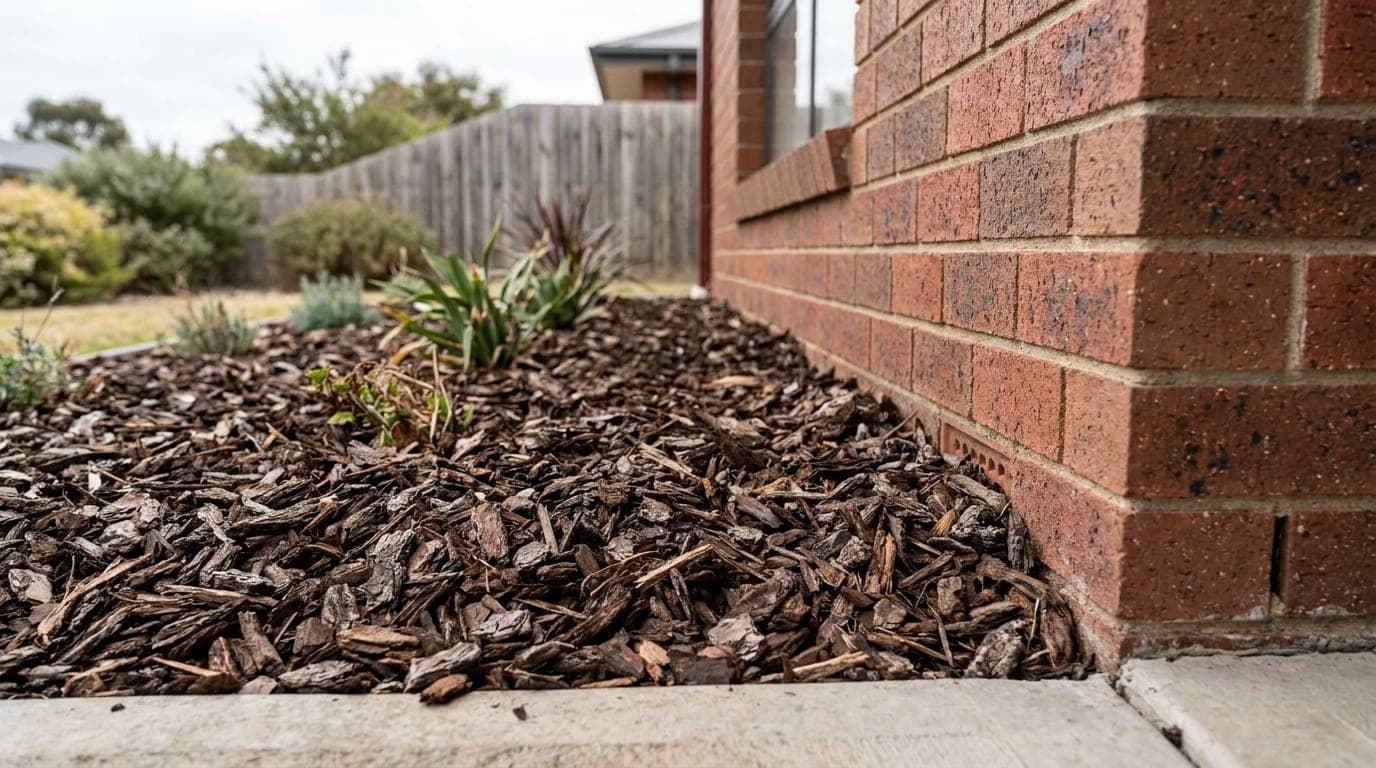
Garden beds and mulch piled up against a wall, above the weep holes, remove the one visual cue that lets a technician (or you) spot a mud tube early. It is one of the most common and most avoidable mistakes on Adelaide properties, and it is specific enough to warrant its own coverage: see how to prevent termites in your Adelaide home for the clearances that actually matter.
8. Dismissing a flying termite swarm as "just flying ants"
A swarm of winged termites (alates) around dusk, especially after rain, is one of the clearest signals a colony is nearby and mature enough to be reproducing. Waving it off as a one-off insect nuisance, rather than a prompt to get an inspection booked, is a mistake that costs homeowners the early-warning advantage a swarm actually gives them.
9. Assuming old damage means the problem is already over
Finding old termite damage during a renovation or a routine repair does not mean the colony has moved on. It means the conditions that attracted termites in the first place were present at some point, and unless those conditions were specifically corrected, there is no reason to assume the risk has gone away. Old damage should prompt a fresh inspection, not relief that the worst is behind you.
10. Waiting for a problem instead of managing risk continuously
The homeowners who avoid the costliest outcomes are the ones who treat termite management as an ongoing routine, not a one-off event triggered by a scare. That means annual checks, sensible landscaping, attention to moisture, and acting on early signs rather than waiting for confirmation. If you want a quick read on where your own property sits, the do I have termites checker is a useful first step before booking anything.
The Adelaide-specific pattern behind most of these mistakes
Across the properties we see referred through this site, the mistakes above rarely happen in isolation. A garden bed built up against the slab (mistake 7) is usually paired with a homeowner who has not had an inspection in several years (mistake 1), and the two combine to hide activity that a swarm eventually reveals (mistake 8). It is the stacking of 2 or 3 small, ordinary decisions, not one dramatic failure, that produces most of the expensive outcomes we hear about. That is a distinctly suburban-Adelaide pattern: established gardens, older brick veneer stock, and a strong culture of "it looked fine last time we checked" standing in for an actual annual routine.
According to CSIRO's termite management guidance, regular inspection remains the most reliable way to catch subterranean termite activity before it causes structural damage, precisely because visible signs lag well behind the actual extent of a colony.
What to do instead
None of these mistakes require a dramatic response to fix. Book an annual inspection, leave any suspected activity undisturbed until a technician has assessed it, check quotes for what is actually included rather than just the bottom line, and keep garden beds clear of weep holes. If any of the 10 mistakes above sound familiar on your own property, we connect you with licensed Adelaide technicians through our termite control network, who can assess the property properly and recommend a fix scaled to what they actually find, rather than what a DIY approach assumes.
Ready to get quotes from licensed technicians?
Tell us about your problem and we match you with a vetted local operator. Free, no obligation.
Get free quotesFrequently asked questions
Skipping the annual inspection. Termites can be active inside wall cavities and subfloors for a long time before any visible sign reaches the surface, so a yearly check by a licensed technician is the difference between catching a colony early and finding out only once there is structural damage.
Yes. Supermarket sprays kill the handful of termites you can see and disturb the rest of the colony, which often scatters into new areas of the timber frame rather than being eliminated. The correct first step is to leave the area undisturbed and get a licensed technician to assess the full extent of the colony before anything is treated.
Not necessarily, but it should never be assumed the risk is over. Old damage tells you termites have been active on the property before, which usually means the conditions that attracted them (moisture, timber contact with soil, poor subfloor ventilation) are still present unless they were specifically corrected. An inspection is the only way to know whether the colony is gone or simply moved on to another part of the structure.
Yes. New builds carry a false sense of security because the timber is fresh and the property looks well presented, but termite risk is about soil contact, moisture and concealed entry points, not the age of the house. Renovations that add decking, retaining walls or garden beds against the slab edge can introduce exactly the same risks a 1960s home has always carried.