Barrier vs Baiting: Which Termite Treatment Is Right for Your Adelaide Home
Termite barrier vs baiting compared for Adelaide homes: cost, disruption and speed, so you know which system suits your slab, soil and budget.
Key takeaways
- Chemical barriers suit homes with full concrete slabs and continuous accessible perimeters, and start protecting from the day they go in.
- Baiting systems suit homes with limited soil access, reticulated gardens, or where drilling through pavers and slabs is impractical.
- Barriers cost more upfront but need less ongoing servicing; baiting costs less to install but requires quarterly to biannual station checks.
- Adelaide's reactive clay soils and older bluestone footings change how well each system performs, and a licensed technician needs to inspect your specific build before recommending one.
- Many Adelaide homes end up with a combination of both systems rather than a single method.
A chemical barrier creates a continuous treated zone in the soil around your home that termites cannot cross undetected, giving faster protection for homes with full slab access, while a baiting system uses stations placed around the property to intercept and eliminate the colony over months, suiting homes where barrier installation is difficult. The right pick depends on your home's footings, soil access and how much disruption you can tolerate, not on which product is "best".
Adelaide homeowners researching termite protection usually land on this exact fork: barrier or bait. Both are legitimate, code-compliant methods used across South Australia, and both fail if installed against a property they don't suit. This guide breaks down when each wins, what it actually costs, and the local quirks that change the calculation for Adelaide homes specifically.
How a Chemical Barrier Actually Works
A chemical soil barrier involves trenching and drilling around the entire perimeter of a structure, then injecting a non-repellent termiticide into the soil and any slab penetrations. Termites can't detect the chemical, so they walk through it, carry it back to the nest on their bodies, and it spreads through grooming and contact. Properly installed, it forms a continuous barrier with no gaps, because a single untreated gap under a step or path is the one termites will find.
The full mechanics of this are covered in Chemical Soil Barrier Treatment: What to Expect, but the short version for this comparison: barriers work best on homes with a full concrete slab, clear soil access around the footprint, and no complicated additions like sunrooms or paved courtyards blocking drilling points. Protection begins as soon as the barrier is complete, which is the main reason homeowners under active threat lean toward this method.
How a Baiting System Actually Works
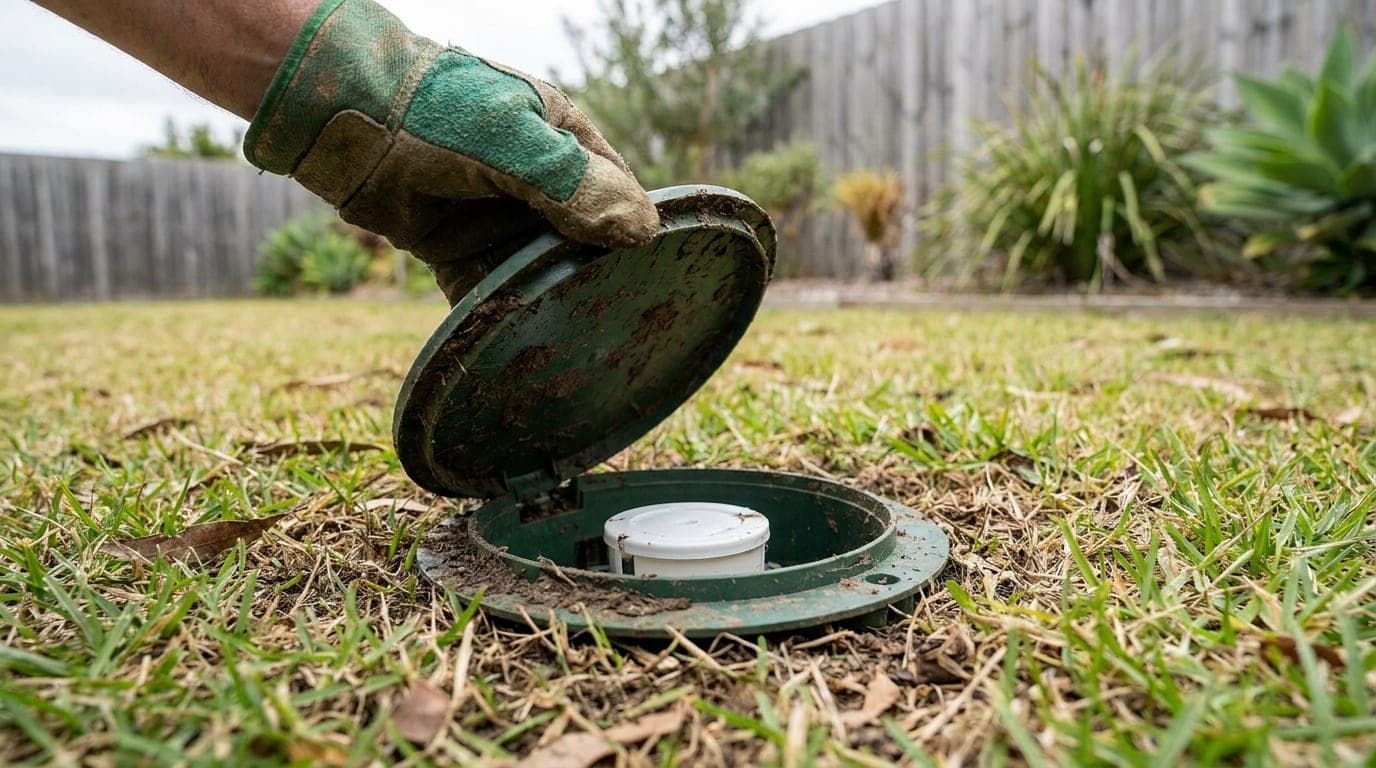
Termite baiting places small in-ground (or occasionally above-ground) stations containing a cellulose material laced with a slow-acting insect growth regulator. Foraging termites feed on the bait and share it with the colony through trophallaxis, and because the effect is delayed rather than instant, the termites don't associate the bait with a threat and keep feeding it back to the nest. Over several months this can suppress or eliminate the colony entirely, not just the individuals near your house.
Termite Baiting Systems Explained: Do They Work? covers the monitoring cycle in detail. The trade-off is time: baiting doesn't stop an active infestation overnight, it manages the colony over a season or two, with the licensed technician checking and replenishing stations on a set schedule.
Side-by-Side: Cost, Speed and Disruption
| Chemical barrier | Baiting system | |
|---|---|---|
| Install cost | Higher upfront, $2,000 to $4,500 typical | Lower upfront, ongoing monitoring fees added |
| Speed of protection | Immediate once complete | Gradual, colony suppression over months |
| Disruption | Drilling through slabs, paving, driveways | Minimal, small discreet ground stations |
| Best suited to | Full slab homes, clear perimeter access | Homes with limited access, reticulated gardens |
| Maintenance | Re-treatment typically every 5 to 8 years | Station checks every 3 to 6 months |
| Colony impact | Repels/kills termites contacting the zone | Can eliminate the source colony |
If you want the full cost breakdown by method rather than just the summary above, see the termite treatment cost guide, which separates barrier and baiting pricing by home size and construction type.
The Adelaide-Specific Factor Most Guides Skip
Here's what generic pest-control content misses: Adelaide's reactive clay soils, particularly across the eastern suburbs and foothills belt, expand and contract seasonally in a way that can crack a chemical barrier's continuity over time if it wasn't installed with enough overlap at footings and service penetrations. A barrier installed to the letter of AS 3660 will account for this, but a rushed or underpriced job often won't, which is one reason a cheap barrier quote should raise questions rather than excitement. Older Adelaide homes on stone or rubble footings, common in suburbs like Unley, Norwood and parts of the Adelaide Hills, also have far less predictable soil profiles under the slab edge, and a technician who hasn't worked that housing stock before can miss access points a local specialist would know to check.
This is also why baiting tends to outperform barriers on homes with extensive reticulated garden beds close to the foundation. Adelaide's watering restrictions have pushed a lot of homeowners toward drip irrigation right along the house line, and that consistent moisture is exactly the kind of termite-favourable microclimate that makes ongoing bait monitoring more useful than a one-off barrier that irrigation lines can eventually compromise.
When a Combination Makes More Sense Than Either Alone
A meaningful share of Adelaide properties end up with both systems rather than picking one. A common pattern: a chemical barrier protects the main slab where access is straightforward, while bait stations monitor a detached garage, a granny flat, or a garden zone the barrier trenching couldn't reach without destroying established plantings. This isn't upselling, it's matching the method to what the property's layout actually allows.
For homes with reticulation systems built in at construction, Termite Reticulation Systems: Built-In Protection for New Builds explains how a pre-installed dosing network changes the equation again, since re-treatment doesn't require any drilling at all.
Getting the Right Answer for Your Specific Home
Neither method is right in the abstract. The only way to know which suits your slab type, soil, garden layout and budget is a physical inspection. If you want a faster starting point before that inspection, the termite treatment method selector walks through your home's construction details and narrows the options before a technician even arrives.
When you're ready for that inspection, we connect you with licensed Adelaide termite technicians through termite treatment, who assess your specific footings, soil and access before recommending barrier, baiting, or a combination. For general background on how the standards behind both methods work, the CSIRO's termite research overview is a useful independent reference on termite biology and control science.
The Bottom Line
Barriers suit homes that need fast, continuous protection and have the slab access to support proper installation. Baiting suits homes where access is limited, disruption needs to stay minimal, or colony elimination matters more than immediate exclusion. Adelaide's soil types and older housing stock mean the right answer genuinely varies street to street, which is why a proper inspection beats guessing from a blog post, including this one.
Ready to get quotes from licensed technicians?
Tell us about your problem and we match you with a vetted local operator. Free, no obligation.
Get free quotesFrequently asked questions
Neither is universally better. Barriers work faster and suit homes with full slab access, while baiting suits homes where drilling isn't practical or where ongoing colony monitoring is the priority. The right choice depends on your home's construction, not a general ranking.
Yes, and it's common in Adelaide. A chemical barrier can protect the main slab while bait stations monitor a separate garage, granny flat, or garden bed the barrier doesn't reach.
Chemical barriers typically run $2,000 to $4,500 depending on perimeter length and drilling access, while baiting systems usually start lower for installation but add ongoing monitoring fees each visit. Get a full cost breakdown before comparing quotes side by side.
A properly monitored baiting system can eliminate the colony feeding on it, not just the termites at your house. This is a genuine advantage over barriers, which stop termites entering but don't necessarily destroy the colony itself.