What Does Termite Damage Look Like?
See what does termite damage look like: warped skirting, blistered paint, hollow timber and buckling floors, and how to tell it apart from other damage.
Key takeaways
- Termite damage usually shows as rippled or bubbled paint, sagging skirting boards, and timber that sounds hollow or papery when tapped
- The damage is almost always internal first: by the time you see visible distortion, the timber underneath has already lost most of its strength
- Adelaide's older double-brick homes hide damage particularly well because the skirting and architraves sit flush against a solid wall with no gap to inspect
- Photographing suspected damage and getting it assessed quickly protects the timber that is left, rather than waiting to see if it gets worse
Termite damage typically looks like rippled or bubbled paintwork, skirting boards that flex or crumble under light pressure, doors and windows that stick for no clear reason, and timber that sounds hollow, papery, or dull rather than solid when you tap it with a knuckle. In most cases, the surface only tells part of the story: the timber underneath has usually been hollowed out well before any of these signs appear.
That gap between what you can see and what is actually happening inside the timber is the single biggest reason termite damage in Adelaide homes gets missed for years. It is worth understanding what the damage actually looks like, room by room, and why some Adelaide housing stock hides it better than others.
What termite-damaged timber actually looks like
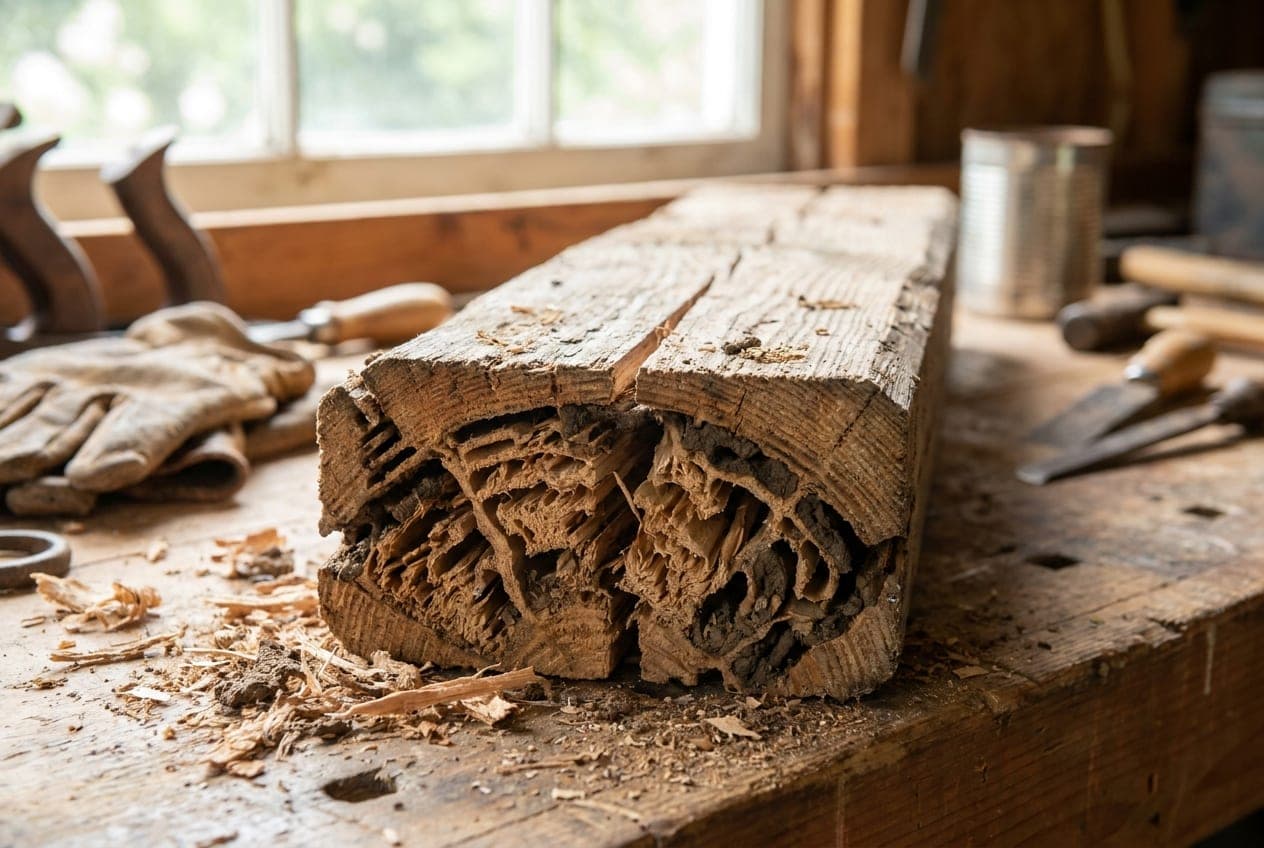
Termites eat timber from the inside, following the softer spring-growth layers and leaving the harder grain intact as a thin shell. That is why damaged timber rarely looks eaten away from the outside. Instead, look for:
- Rippled or bubbled paint, especially on skirting boards and architraves, caused by moisture and mud packed into the timber underneath as termites work
- Blistered or crumbling skirting that gives way under a firm press of the thumb, sometimes leaving a soft, papery dent
- Timber that sounds hollow or dull when tapped, compared with the sharp knock of solid timber nearby
- Fine cracked or rippled patterns in painted surfaces, sometimes described as a "flaky" or "corrugated" texture
- Sagging skirting boards, architraves, or door frames that have lost enough internal structure to droop slightly out of true
- Doors and windows that stick where frames have been eaten from behind, distorting the opening
If you cut into damaged timber (something we would not recommend doing yourself, but is done during a professional inspection), you typically find a honeycomb of galleries running with the grain, packed with mud and frass, leaving only a thin veneer of sound wood.
Where it shows up first in an Adelaide home
Termites travel from the soil, so damage tends to start low and work upward. The first places worth checking are:
Skirting boards and architraves
These are usually the first casualty because they sit closest to the slab or subfloor and are often untreated pine. Press along the length of the skirting with your thumb, particularly in corners and behind furniture that is rarely moved.
Door and window frames
Frames that suddenly stick, drop, or no longer close flush are a common early tell, especially in weatherboard and timber-framed additions common in the Adelaide Hills and older suburbs like Unley and Norwood.
Subfloor timber
In homes with a timber subfloor, bearers and joists are a prime target. This is one reason subfloor ventilation matters so much in older Adelaide homes: a poorly ventilated subfloor stays damp, and damp timber is far more attractive to a termite colony than dry timber.
Roof void timber
Less commonly checked, but roof trusses and ceiling battens can be damaged without any visible internal sign at all, since the space is rarely inspected by homeowners.
Why Adelaide's older double-brick homes hide it so well
Here is the detail most homeowners never get told: Adelaide's classic double-brick bungalows, common right across the western and southern suburbs, are actually harder to read for termite damage than a lot of newer builds, not easier. The skirting sits hard against solid masonry with no cavity behind it, so there is nothing to tap on except the timber itself, and no gap to shine a torch into. In a timber-framed home you can often get a borescope behind the plaster and see the frame directly. In a double-brick home, the skirting board is frequently the only visible clue you get before the damage has spread well beyond it. Homeowners in these houses tend to assume solid masonry construction means low risk, when in reality it just means the warning signs are quieter.
Termite damage vs other causes: what to check first
Not everything that looks like termite damage is termite damage. Water damage, old age, and general timber movement can all produce similar surface symptoms, and it is worth ruling these out before assuming the worst. We cover this in detail in Termite Damage vs Water Damage: How to Tell, but the short version: water damage tends to darken and swell timber and often has an obvious moisture source nearby (a leaking pipe, a roof leak, a shower recess), while termite damage tends to leave timber lighter, hollow, and structurally weaker without an obvious wet patch.
Two other signs worth checking alongside visible damage: termite mud tubes running up foundations or piers, and hollow-sounding timber more broadly across the home, since damage in one spot is rarely isolated. According to CSIRO research on termites in Australian buildings, subterranean termites (the dominant pest species across South Australia) can cause structural damage well before any external sign is visible, which is why an inspection matters more than a visual check alone.
What to do if you spot it
If you find timber that matches any of the signs above, the two things to avoid are probing at it repeatedly or spraying it with a household insecticide. Both can scatter or stress the colony, making it harder for a technician to trace the nest and treat it properly. Instead:
- Photograph the area for reference
- Note where else in the home you have noticed sticking doors, hollow sounds, or rippled paint
- Arrange an inspection rather than waiting to see if it worsens, since termite activity does not slow down on its own
We connect Adelaide homeowners with licensed technicians who assess the extent of the damage, confirm whether the colony is still active, and recommend the right next step, whether that is a chemical barrier, a baiting system, or simply confirming the damage is old and inactive. For the full picture on identifying an infestation before it reaches this stage, see 12 Signs You Have Termites (and What to Do Next), and for background on South Australian regulatory standards around termite protection, the Australian Building Codes Board sets the national framework that SA builders work within.
Termite damage is rarely a single, obvious event. It is a pattern of small, easy-to-dismiss signs that add up once you know what you are looking for, and Adelaide's construction styles (double brick especially) make that pattern easier to miss than most homeowners expect.
Ready to get quotes from licensed technicians?
Tell us about your problem and we match you with a vetted local operator. Free, no obligation.
Get free quotesFrequently asked questions
Often yes. Look for skirting boards that flex when pressed, paint that has a rippled or bubbled texture, doors and windows that stick without an obvious cause, and timber that sounds dull or hollow when tapped with a knuckle. A licensed technician also uses moisture meters and sometimes a borescope to check inside wall cavities without removing plaster.
No. Damage varies with the timber type, the termite species, and how long the colony has been active. Pine skirting often blisters and crumbles quickly, while hardwood framing can look almost untouched on the surface while being extensively galleried underneath. This is why a visual check alone is not a reliable diagnosis.
Not necessarily. Termites can cause damage and then move on to another food source nearby, leaving damage behind with no termites currently present. An inspection is still worthwhile because it tells you whether the colony is still active nearby and whether other timbers in the home are also affected.
Avoid probing, spraying, or disturbing the area, since this can scatter the colony and make it harder to treat. Take photos for reference, note the location, and arrange an inspection. We connect Adelaide homeowners with licensed technicians who can confirm what is causing the damage and recommend next steps.