Where Termites Hide in Your Home
Termites hide in subfloors, wall cavities, roof voids and anywhere timber meets damp soil. Here's where Adelaide homeowners miss them most.
Key takeaways
- Termites hide inside timber and behind it, not on top of it: subfloors, wall cavities, roof voids and skirting boards are the main blind spots because they offer darkness, moisture and an unbroken run to a food source.
- Subterranean termites need to stay hidden from open air, so they build mud tubes to bridge any exposed gap between soil and timber rather than travelling across a visible surface.
- Adelaide's reactive clay soils and the number of homes on brick pier or low-set subfloors create more hidden entry points than a typical slab-on-ground build, which is a specifically local pattern worth understanding.
- A visual walk around the outside of the house misses most active termite activity: the subfloor, roof void and wall cavities need to be checked directly, usually by a licensed technician with the right tools.
Termites hide wherever it is dark, still and close to moisture: subfloors, wall cavities, roof voids, behind skirting boards, and inside stumps or piers in contact with soil. They avoid open, exposed surfaces almost entirely, which is exactly why so much termite damage in Adelaide homes goes unnoticed until it is well advanced.
Why termites hide in the first place
Subterranean termites (the species behind the vast majority of structural termite damage in Australia) are soft-bodied and lose moisture quickly in open air. They also rely on pheromone trails and constant contact with the colony to function. Both of those biological pressures push them toward enclosed, humid spaces and away from anywhere a bird, a lizard or simple sunlight could reach them. When they do need to cross an exposed gap, such as the join between soil and a foundation wall, they build a covered mud tube rather than travelling across the open surface. That single habit explains almost every hiding pattern below.
The subfloor is the number one blind spot
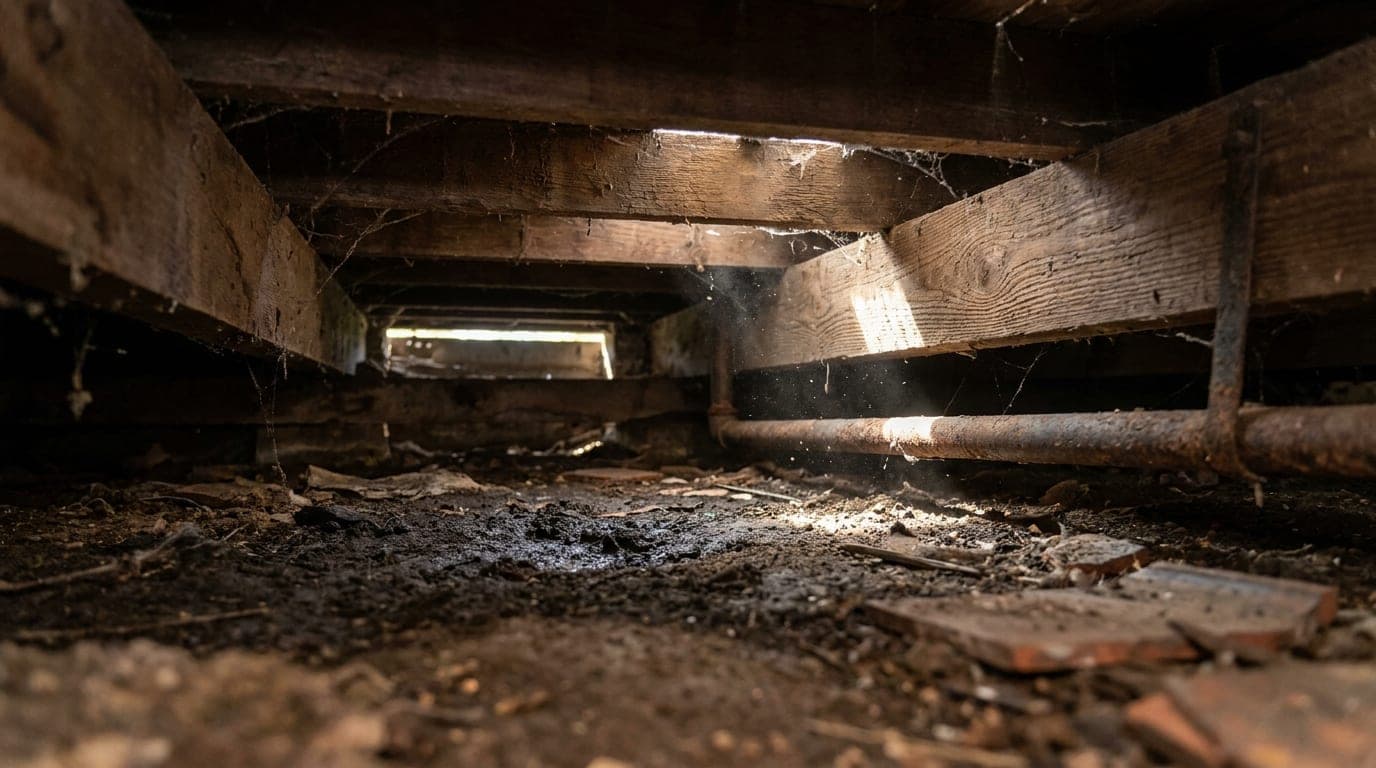
In Adelaide, particularly across the older housing stock in the inner and northern suburbs, timber and brick pier subfloors are common, and the underside of the house is rarely checked by anyone who isn't specifically looking. Termites will travel up the outside of a stump or pier, often following a mud tube, and move directly into bearers and joists from underneath. Because the visible floor above can look and feel completely normal for a long stretch of that process, the subfloor is where we most often see activity that has been running for months before any front-of-house symptom shows up. If your home has a low-set subfloor or timber stumps, this is the single area worth prioritising in any check, and it connects directly to broader ventilation issues covered in subfloor ventilation and termite risk in older Adelaide homes.
Wall cavities: hidden even from a good inspection
Brick veneer construction, which makes up a large share of Adelaide's housing stock, creates a narrow cavity between the external brick skin and the internal timber frame. Termites can travel up inside that cavity from ground level, completely out of sight from both outside and inside the house, and feed on the frame for a long period without the brickwork or plasterboard showing any change. This is one of the harder locations to rule out without removing a section of wall lining or using detection tools such as a moisture meter or termite-detection radar, which is one reason a DIY visual check is never the same as a proper trade inspection.
Roof voids and ceiling timbers
Less commonly checked again, roof void timbers, especially where a leaking gutter or old plumbing has kept a section of frame consistently damp, can support termite activity that has travelled up through wall cavities from ground level. Homeowners rarely go into the roof space unless there's already a reason to, which makes this one of the last places activity gets discovered.
Skirting boards, architraves and window frames
Closer to eye level, termites will hollow out skirting boards, architraves and timber window frames from the inside, leaving a thin, often unbroken outer surface. A hollow sound when tapped, or paint that looks slightly rippled or blistered, can be the only external clue. For a fuller picture of what these signs look like in practice, see 12 signs you have termites (and what to do next) and what termite mud tubes look like and why they matter.
Outdoor timber in contact with soil
Retaining walls, timber fence posts, garden edging and stacked firewood against an external wall are all common secondary hiding spots, because they put timber in direct, uninterrupted contact with damp soil. These areas matter less for the structure of the house itself but often act as the first foothold a colony establishes before extending a mud tube toward the building.
A specifically Adelaide pattern worth knowing
South Australia's reactive clay soils shrink hard over summer and swell again with autumn and winter rain, opening fine seasonal cracks right at the slab edge and around foundations. Termites exploit these cracks as a ready-made hidden pathway, so a mud tube here often follows the exact line of a shrinkage crack rather than the shortest route to timber. Combined with the number of older, low-set or pier-and-beam homes across the metro area compared with newer slab-on-ground suburbs, Adelaide has more of these hidden entry points than a lot of other Australian capitals. This is a detail worth knowing before you assume a slab-on-ground home is automatically lower risk. Geoscience Australia's soil and ground movement data backs up just how reactive Adelaide's clay content is relative to sandier profiles elsewhere in the country.
Why a walk around the house isn't enough
Because termites deliberately avoid anywhere visible, a casual look around the outside of a house will miss almost all active hidden feeding. Genuine coverage means checking the subfloor directly, inspecting the roof void, and, where there's reason for concern, opening up a section of skirting or wall lining rather than just eyeballing paintwork from a metre away. If you're not sure whether what you've noticed lines up with typical termite behaviour, our do I have termites? checker is a fast way to narrow that down before booking anyone out.
What to do if you suspect hidden activity
Don't disturb a suspected entry point, mud tube or hollow-sounding section before it's been assessed, since disturbing an active feeding site can push the colony to relocate rather than solve anything. The next step is a proper inspection of the subfloor, roof void and wall cavities by someone equipped to check all of them, not just the parts of the house that are easy to see. We connect Adelaide homeowners with licensed, vetted local technicians who carry out that kind of full-property inspection and can recommend termite treatment matched to exactly where the activity is found, rather than a generic surface spray.
The bottom line
Termites hide precisely where homeowners don't look: under the floor, inside the walls, up in the roof, and behind skirting boards, because those are the only places that give them the darkness and moisture they need. Knowing that pattern is the first step. Getting the hidden spaces actually checked, rather than just the visible ones, is what actually catches an infestation before it becomes structural damage.
Ready to get quotes from licensed technicians?
Tell us about your problem and we match you with a vetted local operator. Free, no obligation.
Get free quotesFrequently asked questions
Most commonly in the subfloor (bearers, joists, stumps and piers), inside wall cavities behind brick veneer or plasterboard, in roof void timbers, and behind skirting boards or architraves. These spots share dark, still, moisture-retaining conditions that termites need to survive, which is exactly why they're rarely spotted from a casual walk around the house.
Yes, and this is common. Termites can feed on internal timber framing for a long time before any external sign, such as a sagging floor, a sticking door or a hollow-sounding skirting board, becomes noticeable. That lag is why a scheduled inspection matters more than waiting for obvious damage.
Yes. Subterranean termites will travel up inside a wall cavity, particularly in brick veneer construction, and feed on the timber frame from the inside while the external brick and internal plasterboard look completely untouched. This is one of the hardest locations to check without removing a section of wall or using specialised detection tools.
Subterranean termites, the species responsible for most structural damage in Australia, are highly vulnerable to dehydration and predators in open air. They build enclosed mud tubes to cross any exposed gap and strongly prefer feeding inside timber where they're fully enclosed, which is why hidden cavities and subfloors are their preferred territory over anything visible.