Termite Barriers and How Long They Last
Chemical termite barriers last 8 to 10 years on average, though soil type and installation quality shift that window. Here is what actually determines the lifespan.
Key takeaways
- Most chemical soil barriers are rated for 8 to 10 years, but Adelaide's clay-heavy soils can shorten that window if drainage is poor
- A barrier is only as good as its weakest point: gaps around pipes, extensions and paving are the usual failure spots
- Physical barriers (stainless steel mesh, graded stone) installed during construction can last the life of the building if undisturbed
- An annual inspection is the only reliable way to know a barrier is still doing its job, not the installation date on a certificate
The short answer
A chemical termite barrier typically lasts 8 to 10 years before it needs renewing, though the real figure depends on soil type, installation quality and how much the ground around your home gets disturbed afterwards. That range comes from the manufacturer data on how long the treated zone stays chemically active in soil, not a fixed expiry stamped on your certificate. In Adelaide, clay-heavy soils and homes with poor subfloor drainage tend to sit at the shorter end of that window, while stable, well-drained sites can push past 10 years without a gap appearing.
What "8 to 10 years" actually means
Termiticide barriers work by creating a continuous treated zone in the soil around and under the structure. Termites either die or are repelled when they try to cross it. The active ingredient breaks down slowly over time through microbial activity, moisture cycling and soil chemistry, which is why the industry quotes a range rather than a single number.
That range assumes the barrier stays intact and undisturbed. It is a chemistry estimate, not a promise about your specific property. Two identical products installed on the same street can behave differently depending on:
- Soil composition. Adelaide's mix of reactive clay in the plains and sandier, rockier ground in the Adelaide Hills both affect how the chemical binds and how long it stays effective.
- Moisture and drainage. Homes with poor subfloor ventilation or drainage that pools against the foundation see faster breakdown of the treated zone. This is one of the clearest links between moisture, drainage and termite risk that we see across older Adelaide suburbs.
- Installation completeness. A barrier is a continuous line of defence. If it was installed with gaps, or installed before an extension was added without extending the treatment, the "8 to 10 years" figure is irrelevant because the barrier was never complete in the first place.
Where barriers actually fail (it is rarely the chemical wearing out)
Most barrier failures we hear about from Adelaide homeowners are not the chemistry quietly expiring on schedule. They are physical breaches created after the fact:
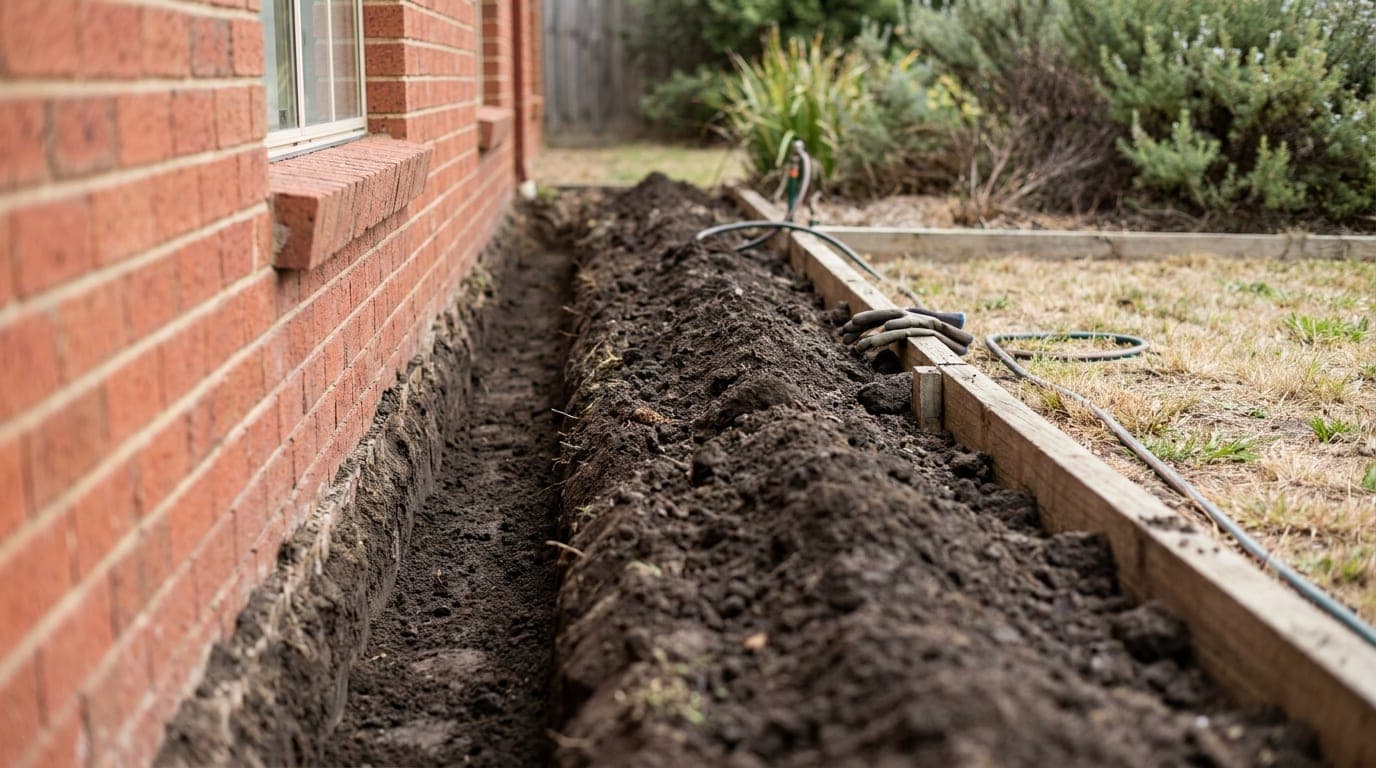
- Plumbing and drainage trenches dug through a treated zone without the technician sealing the gap afterwards.
- New paving, decking or garden edging laid directly over or through the barrier line.
- Extensions and additions built onto a home without extending the barrier to cover the new footprint, leaving an untreated join between old and new construction.
- Retic and irrigation lines installed post-treatment, which both disturb the soil and add moisture exactly where you do not want it.
This is the counterintuitive part most homeowners miss: a barrier installed 4 years ago with a garden bed dug through it last spring is functionally weaker than a barrier installed 9 years ago that has never been touched. Age on the certificate tells you less than what has happened to the ground since.
Physical barriers behave differently
Not every barrier is a chemical treatment. Physical barriers such as stainless steel mesh, graded granite particle systems, or termite-resistant flashing are usually built into a home during construction, sitting under slabs or around penetration points. Because there is no chemical to break down, a correctly installed physical barrier can protect a structure for its entire life, provided it is never disturbed or bridged by later building work.
The catch is retrofitting. Physical barriers are far more practical to install while a slab is being poured than to add to an existing home, which is why new builds in South Australia have specific regulatory requirements around termite management systems. For an established Adelaide home, a chemical barrier (or a baiting system as an alternative approach) is usually the more realistic option.
Why the inspection matters more than the countdown
The single biggest mistake we see is homeowners treating the barrier's rated lifespan as a "set and forget" date, then being surprised when termites get through years before that date arrives. A barrier is a system, not a warranty. The only way to know it is still doing its job is to physically check it, which is exactly what annual termite checks are for.
An annual inspection catches the things a calendar cannot: a section of barrier compromised by a plumber's trench, a paved area that now bridges the treated zone, or early mud tube activity at a point where the barrier was always thinner than it should have been. Waiting for the "10 year mark" to think about termites again is a false sense of security, particularly in a city where soil movement and seasonal moisture shifts are part of normal conditions.
The CSIRO's timber pest research and Standards Australia's AS 3660 series both frame termite management as an ongoing system requiring regular inspection, not a one-off installation. That framing holds in practice: the barrier buys you protection, but only routine checks confirm it is intact.
What to do as the years tick over
If your barrier was installed more than 6 or 7 years ago, or if you have had any excavation, landscaping or plumbing work done since, it is worth having it checked rather than assuming it is still complete. This is particularly true if your home sits in a suburb known for higher termite pressure, or if you have already had one of the classic 12 signs of termites show up nearby.
We connect Adelaide homeowners with licensed technicians who can assess whether an existing barrier is still intact, identify where it may have been compromised, and recommend whether renewal, a top-up, or a switch to chemical barrier treatment with an extended warranty makes sense for your property. If you are unsure how your home's protection is tracking, our termite control referral service is the fastest way to get a straight answer from someone licensed to give one.
Ready to get quotes from licensed technicians?
Tell us about your problem and we match you with a vetted local operator. Free, no obligation.
Get free quotesFrequently asked questions
No. The 8 to 10 year figure is a manufacturer guideline based on how long the chemical stays active in soil under normal conditions, not a hard expiry. Heavy watering, landscaping work or soil disturbance can shorten it, while stable, undisturbed soil can extend it. Annual checks matter more than counting down a calendar date.
Yes, and this is the most common way barriers fail early. Trenching for new plumbing, adding a deck, extending a slab or even installing garden edging can breach a chemical barrier or bridge a physical one. Any excavation work around the foundation should trigger a follow-up inspection.
That is a common and costly assumption. Termites do not wait for a certificate date, and a compromised section of barrier can let them through years early. The safer approach is an annual check regardless of when the barrier was installed, so a gap gets caught before it becomes structural damage.
They solve different problems. Physical barriers like stainless steel mesh are typically installed during construction and can last as long as the building if left undisturbed, but they cannot be retrofitted as easily to an existing home. Chemical barriers are more practical for established Adelaide homes and need periodic renewal. The right choice depends on whether the home is new or existing, which is worth discussing with the licensed technician we match you with.