Signs of Bed Bugs and How They Spread
Learn the early signs of bed bugs, from small blood spots on sheets to a musty odour, and how they spread through Adelaide homes, units and rentals.
Key takeaways
- The first reliable sign is usually small rust-coloured spots on sheets, not the bug itself.
- Bed bugs travel in luggage, secondhand furniture and shared laundry, not on pets or via dirty homes.
- Adelaide's rise in share-housing and short-stay turnover (Airbnb, student rentals) is the biggest driver of new infestations.
- Early detection matters because bed bug numbers double roughly every 2 to 3 weeks once established.
- A licensed technician can confirm an infestation with a proper inspection well before it is visible to the naked eye.
Small rust-coloured spots on your sheets are usually the first real sign of bed bugs, appearing before you ever see a live insect or feel a bite
Most Adelaide homeowners assume they will see a bed bug before anything else, but the more common first sign is a scatter of tiny rust or dark red spots on the mattress seam, pillowcase, or fitted sheet. These are crushed blood spots, not the insects themselves, and they show up well before symptoms or sightings do. Recognising this pattern early is what separates a fast, contained response from a much bigger problem a few months later.
The early physical signs to check for
Bed bugs are small (about the size of an apple seed as adults, smaller as nymphs), flat, and reddish-brown, which makes them easy to miss in daylight and easy to mistake for other debris in bedding. Before you spot the insect itself, look for:
- Rust or dark red spots on sheets, mattress seams, or the piping around a mattress protector (crushed bugs or digested blood)
- Small black or brown dot-like faecal marks, often clustered near the headboard or skirting
- Tiny pale, translucent eggshells or shed skins in mattress seams and bed frame joints
- A faint musty, sweetish odour in a heavily used bedroom, caused by the bugs' scent glands
- Bite marks in a line or small cluster on skin, though as the FAQ below explains, reactions vary hugely between people
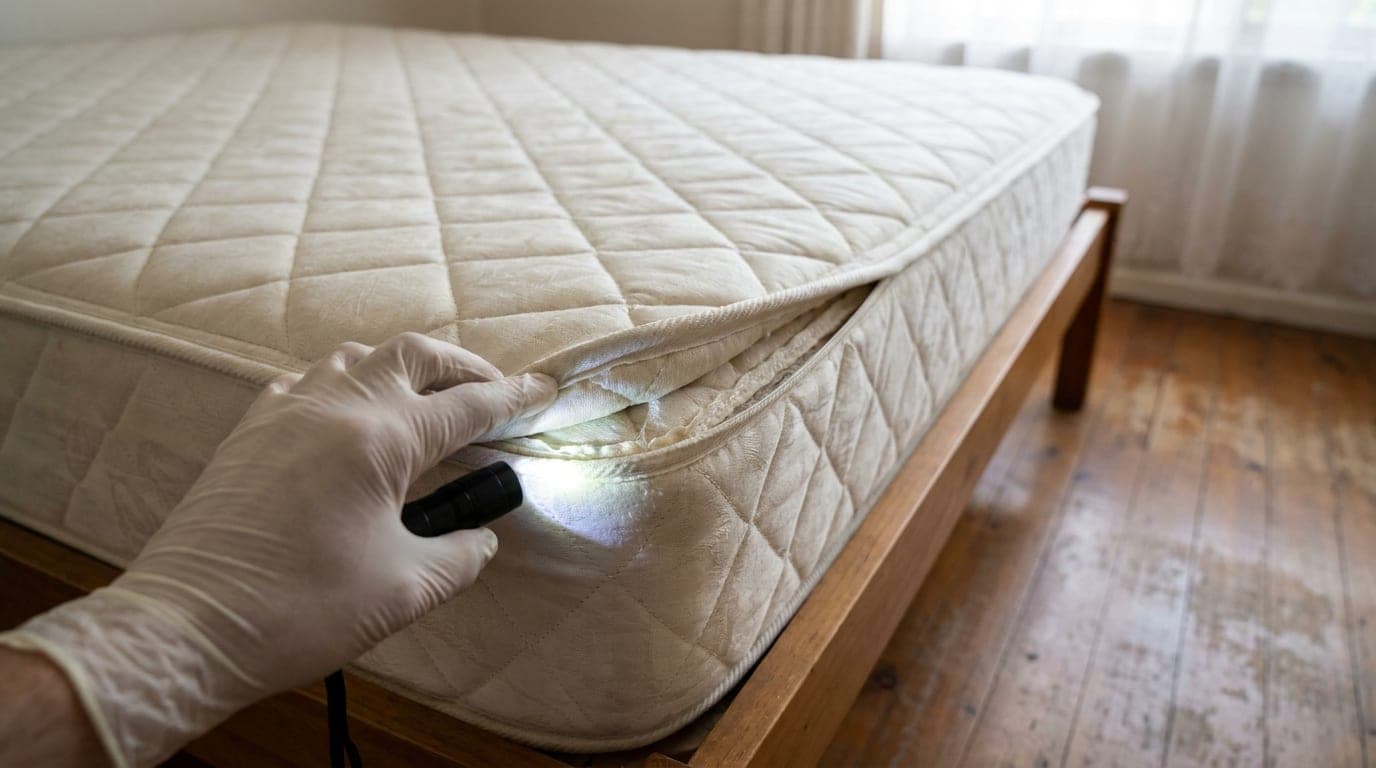
If you're methodically checking a bed after noticing any of these, working from the headboard outward toward the seams and piping gives the clearest picture. That systematic approach is exactly what a licensed Adelaide technician uses during an inspection, and it is worth doing yourself before booking one in, because it tells you how far along the problem already is.
How bed bugs actually get into a home
This is the part most people get wrong. Bed bugs are not a sign of a dirty house, and they don't arrive because of pets or poor housekeeping. They are hitchhikers. The most common entry points into Adelaide homes are:
- Suitcases and travel bags after interstate or overseas trips, especially through hotel stays or short-stay accommodation
- Secondhand furniture, particularly upholstered lounges, headboards, and mattresses bought online or from op shops
- Shared laundry facilities in apartment blocks, where an infested item can transfer bugs between units
- Visitors' bags, coats, or backpacks brought into the home
- Moving house, where boxes and furniture from an infested previous residence carry the problem forward
One thing we see repeatedly in Adelaide's inner-north and CBD-fringe rental markets is a wave of new infestations tracking almost exactly with student semester turnover and short-stay listing changeovers. A property that has hosted several different short-term tenants or Airbnb guests in a row carries meaningfully higher risk than a long-term owner-occupied home, simply because of how many different bags and belongings have passed through it. If you're renting or listing a property in one of these high-turnover pockets, that is worth factoring into how often you inspect, not just how clean the place looks.
Why speed matters more than people think
Bed bugs breed quickly. A single fertilised female can lay 1 to 5 eggs a day, and under good conditions a population can double roughly every 2 to 3 weeks. What looks like an isolated problem in one corner of a mattress can become a multi-room infestation within a season if it's ignored, especially in shared-wall housing like townhouses and units where bugs can move along wiring conduits and skirting boards between adjoining properties.
This is why the goal isn't to wait for a confirmed sighting before acting. If you've noticed the spotting pattern, the odour, or unexplained bite marks, the more useful next step is heat or chemical treatment assessed early, not a wait-and-see approach. Bed bugs don't resolve on their own, and DIY sprays typically only push the population deeper into wall cavities and furniture frames rather than eliminating it.
What to do if you suspect bed bugs
The practical sequence that works:
- Strip and inspect bedding, mattress seams, and the bed frame in daylight, checking especially around buttons, piping, and joints.
- Don't move infested items to another room. This is the single most common mistake, spreading bugs to a second bedroom via a moved mattress or chair.
- Photograph what you find, including any live insects, spotting patterns, or shed skins, so a technician has a clear starting picture.
- Get a proper inspection booked, rather than relying on supermarket sprays, which rarely reach the full extent of an established infestation.
If you're weighing up whether this is worth professional attention at all, our related piece on the treatment methods themselves breaks down how heat and chemical approaches differ and which suits which situation. For agents and tenants managing a handover, our guide to end of lease pest treatment covers what Adelaide property managers expect to see documented.
Getting the right help quickly
Once you've identified likely signs, the fastest path to resolution is a proper inspection rather than more self-diagnosis. We connect Adelaide homeowners and renters with licensed technicians who carry out a structured inspection, confirm the extent of an infestation, and recommend bed bug treatment suited to the property, whether that is a single bedroom in a standalone house or a shared-wall unit where neighbouring properties also need consideration. If you want a sense of likely cost before booking anything in, the pest treatment quote calculator gives a realistic range based on property type and infestation extent.
According to the Australian Department of Health, bed bugs are not known to transmit disease in Australia, but the practical cost is disrupted sleep, spreading infestations, and the difficulty of eradicating them without the right equipment. That combination of low health risk but high nuisance and difficulty is exactly why early identification, rather than early panic, is the right response.
The bottom line
Bed bugs give early warning signs long before an infestation is visible or obvious. Rust-coloured spotting on sheets, small dark faecal marks near the headboard, and a faint musty smell are the signals worth acting on. They arrive through luggage, secondhand furniture, and shared living arrangements rather than poor hygiene, and Adelaide's high-turnover rental and short-stay markets carry a genuinely higher baseline risk. Acting on the early signs, rather than waiting for a confirmed sighting, is what keeps a bed bug problem to one room instead of a whole house.
Ready to get quotes from licensed technicians?
Tell us about your problem and we match you with a vetted local operator. Free, no obligation.
Get free quotesFrequently asked questions
The earliest sign is usually a cluster of small rust or reddish spots on bedsheets or a mattress seam, left behind when a fed bug is crushed during sleep. This often appears before you ever see a live insect or feel a bite.
No. Some people react within hours, others take several days, and some never react at all. Relying on skin reaction alone means a lot of Adelaide households miss an infestation in its early, easiest-to-manage stage.
Yes. Bed bugs have nothing to do with hygiene. They arrive as hitchhikers on luggage, secondhand furniture, or clothing, so even a spotless home can pick up an infestation from a single trip or a single piece of furniture.
A single fertilised female can lay 1 to 5 eggs a day, and populations can double every 2 to 3 weeks under good conditions. What starts in one bedroom can reach a second bedroom or a shared wall in a matter of months if it goes unnoticed.