Chemical Barrier Treatment Cost Breakdown
What a chemical termite barrier costs in Adelaide, what you are paying for, why paved homes cost more, and how to compare barrier quotes without getting caught out.
Key takeaways
- A full chemical soil barrier on an average Adelaide home typically costs $2,500 to $4,500.
- Larger homes or difficult access (lots of concrete to drill) push it to $4,500 to $7,000 and up.
- You are mostly paying for labour and continuity: trenching, drilling paths and treating every penetration, not the chemical itself.
- A suspiciously cheap barrier quote has usually saved money by treating less, which is exactly where termites get back in.
A chemical barrier treatment in Adelaide typically costs $2,500 to $4,500 for an average home, rising to $4,500 to $7,000 and beyond for larger homes or those with difficult, concrete-heavy access. The single biggest thing that moves the number is not the chemical, it is how much labour it takes to create a genuinely continuous treated zone around your specific home.
Adelaide Pest Treatment is a referral service that connects you with licensed local technicians. This breakdown is so you can read a barrier quote properly before you sign it. For the full range across all methods, see our termite treatment cost guide.
What you are actually paying for
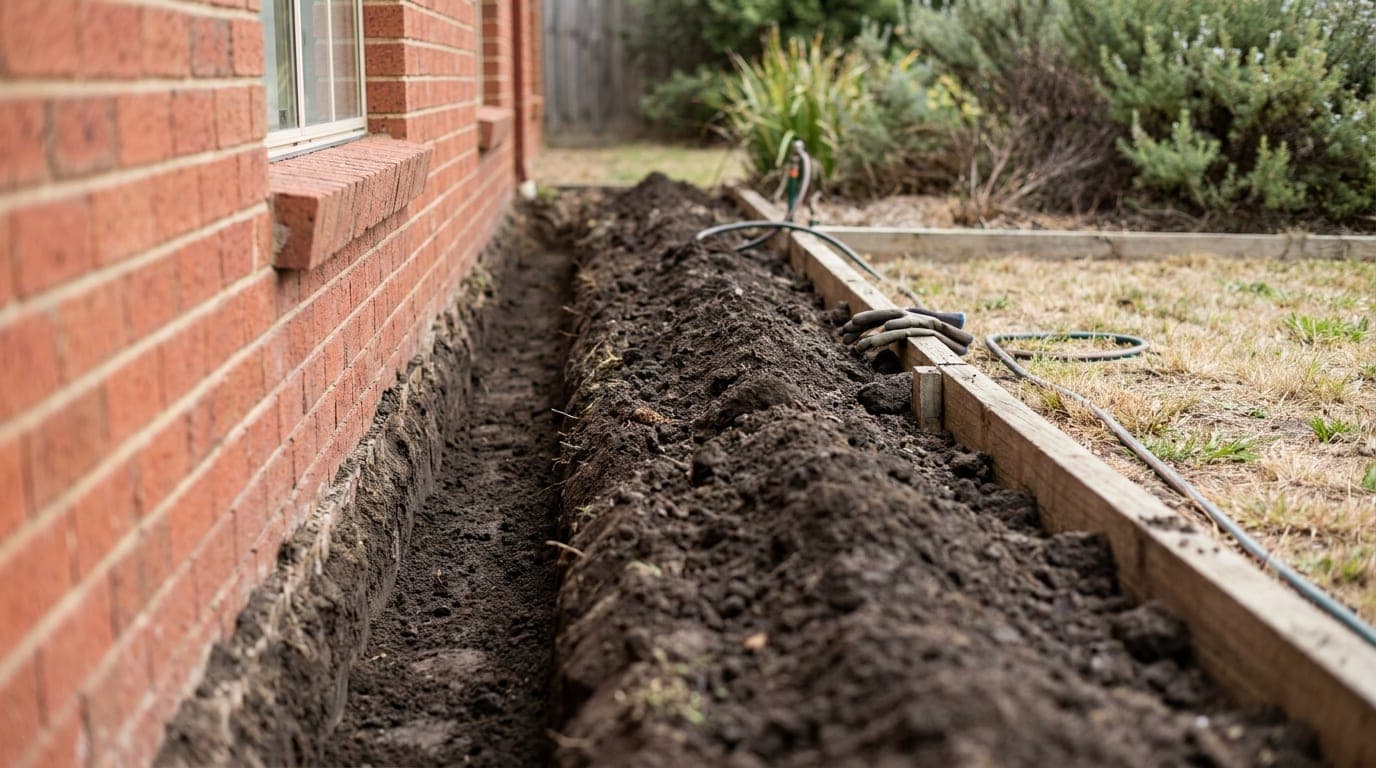
A chemical soil barrier is a continuous treated zone in the soil around and under the building. The cost is dominated by the work of making that zone unbroken:
- Trenching along soil perimeters to the required depth
- Drilling through concrete paths, paving and slab edges wherever they sit over the treatment zone, then patching
- Treating service penetrations (pipes, conduits) where termites can enter
- The termiticide itself, which is a smaller share of the total than most people expect
That is why two homes on the same street can differ by thousands of dollars. The chemical is similar; the labour is not.
Why paved-in homes cost more
This is the Adelaide-specific reality. In established inner and eastern suburbs like Norwood, Unley and Prospect, homes are often wrapped in concrete paths, paved courtyards and rear decks. Every one of those hard surfaces sitting over the treatment zone has to be drilled, treated and made good to keep the barrier continuous. A newer home on a clear block in a northern estate might have a mostly open perimeter that trenches quickly. The paved home is not being overcharged: it genuinely takes more work. You can see how this plays out by home type in our guide to termite treatment cost by home size.
How to compare barrier quotes
The useful question is never simply which quote is cheapest. It is what each technician is actually treating. A barrier is only as good as its weakest gap, so a quote that comes in well under the others has usually found its saving by leaving something out: an untreated garden-bed run, a paved section left undrilled, a penetration skipped.
When you compare, ask each operator to be specific about the areas treated, the product and its expected life, and the warranty. A slightly dearer quote that treats a genuinely continuous zone is the cheaper option over the life of the home. This is important enough that we wrote a full piece on it: is cheap termite treatment worth it.
Barrier versus baiting on cost
If you are weighing a barrier against baiting, the cost profile differs. A barrier is usually the lower upfront cost on a slab home and protects the whole home at once. Baiting has a similar install price but adds an ongoing annual monitoring fee. Neither is simply cheaper, and our termite baiting system cost breakdown covers the other side.
Get a real figure
These bands tell you what fair looks like, but only a licensed technician can price your home. Plug your details into the termite treatment cost estimator for an indicative range, then let us match you with a vetted local operator for an exact fixed quote. No obligation, and we never sell your details.
Ready to get quotes from licensed technicians?
Tell us about your problem and we match you with a vetted local operator. Free, no obligation.
Get free quotesFrequently asked questions
For an average home, a full chemical soil barrier is usually $2,500 to $4,500. Larger homes, or homes wrapped in concrete paths and paving that must be drilled, run higher, commonly $4,500 to $7,000 and up. A licensed technician confirms the exact figure on site.
Access and size drive it. A home with a clear garden-bed perimeter is quick to trench. A home surrounded by paths, paving and a rear deck needs all of that drilled and treated to keep the barrier continuous, and that labour is the difference.
No. The labour to create a genuinely continuous treated zone, the trenching, drilling and treating of every penetration, is the bulk of the cost. That is why cutting corners on labour is where cheap quotes come from, and why they fail.
Commonly 5 to 8 years depending on the product, soil and any disturbance. Reticulation lets a technician refresh the chemical without re-trenching. An annual check confirms the barrier is still intact.